By Donal on Thu, 12/22/2011 - 9:15am | Politics, Sports
Named for the famous revolutionary who was stabbed in the bath, Marat Safin was about as talented and powerful as anyone that has played tennis. While the he earned a handful of good results on the tour, like defeating Sampras in the 2000 US Open and briefly claiming the #1 ranking, the rumor was that he spent too much time satisfying his female fans. Though charming off-court, he was known for angry outbursts on court and claims to have smashed over a thousand racquets. He once played the Hopman Cup, "sporting a bandaged right thumb, two black eyes, a blood-filled left eye, and a cut near his right eye, all suffered in a fight several weeks earlier in Moscow."
So he's well prepared for a life in Russian politics.
By Donal on Wed, 12/21/2011 - 11:27am | Politics, Technology
I got another Keystone XL (KXL) email this morning, but it wasn't from Duncan Meisel or Bill McKibben:
Dear Friend:
Thank you for writing. President Obama has heard from many Americans concerning the proposed Keystone XL Pipeline project, and we appreciate hearing from you.
The President is committed to creating the most open and transparent Government in American history, and values your input. Given your interest in this matter, you may be interested in reading a recent official White House response to a petition on this issue. To learn more, please visit: www.WhiteHouse.gov/Energy.
Some live tennis is being played, but in a series called Love-30, the Tennis Channel has been mostly rebroadcasting the 30 best matches of the year. There certainly is live controversy Down Under, though, in advance of the Australian Open. On Tennis Channel's news crawler, I caught a glimpse of a story about players being fined $75K for playing the Hopman Cup, an exhibition tournament named after the legendary Aussie tennis coach.
Exhibitions have long been controversial. In 1991, Monica Seles ticked off a lot of people when she withdrew from Wimbledon, citing an injury, only to play an exo in Mahwah NJ for a guaranteed six-figure payday. There's no income equality in tennis. Once they've succeeded on the tour, top players can make stress-free money playing exos, but the tour and the tournament organizers need those top players to attract crowds that keep their tournaments profitable, and claim that without the tour, there would be no top players. Tennis politics is truly Byzantine.
[Allison Kilkenny]A funny thing happens when one uses the term “police state” to describe behavior by authorities in response to the Occupy protests. Very Serious Company turns pale and insists that the United States is not turning into a police state—at least not yet. America isn’t North Korea or East Germany or Russia, for goodness sake, Very Serious Company continues. Police don’t physically snatch journalists off the streets and murder them in back alleys, so no one has the right to label the United States a “police state.”
[One of my former, and unemployed, coworkers noted on FB that her car was surrounded by police chasing OWS protestors, so I went looking for a report.]
By Donal on Sun, 12/18/2011 - 8:10pm | Politics, Social Justice
I don't know who dubbed me "dag's doomer" over the masthead last week, but I had to laugh because I think of doomers as those guys that are predicting an imminent meltdown of society (or its cheese) but will gladly sell gold, shotguns and freeze-dried food to all comers. We're in the time of year when radio stations replay the classic songs, tv stations replay the classic movies, newspapers tally celebrity deaths, and doomers tell us just how lucky we were this year but just how bad next year will be. I'm sure James Kunstler, Dr (Doom) Nouriel Roubini, et al, will not disappoint us in the doomsaying department, but let's face it, folks, things are already bad right now. As Joseph Stiglitz writes in Vanity Fair:
It has now been almost five years since the bursting of the housing bubble, and four years since the onset of the recession. There are 6.6 million fewer jobs in the United States than there were four years ago. Some 23 million Americans who would like to work full-time cannot get a job. Almost half of those who are unemployed have been unemployed long-term. Wages are falling - the real income of a typical American household is now below the level it was in 1997.
Gingrich’s double-digit plummet is significant. It mirrors the pattern Rasmussen has seen since he began polling Iowa Republicans in August: For five consecutive months, a different candidate has come out on top each time. First it was Representative Bachmann, who won the Iowa GOP’s unscientific, nonbinding straw poll in August. Next was Governor Perry, then Herman Cain, then Gingrich. The latest poll has Romney on top for the first time.
William McRaven - I had never heard of him, but I gather he helped nail OBL.
Ai Weiwei - a noted protestor himself.
Paul Ryan - He represents what they were protesting.
Kate Middleton - WTF?
I watched Val Kilmer in Red Planet again last night. It's 2056 and Earth has been seeding Mars with algae because our blue marble is almost toast. The acting and SFX are OK, but the plot is contrived. I like scifi enough to overlook small errors, but some of the science in the fiction doesn't make a lot of sense. Spaceships swoosh as they go by, but just about every show does that. A helper robot ignores Asimov's three laws and decides to be a ninja assassin. A scientist calls some exoskeletoned Martian insects, "nematodes," which I recall as being simple roundworms. But hey, it's escapist fantasy.
In America's New Energy Security, Daniel Yergin jumps on the tight oil bandwagon, claiming that everything's going to be fine because we're finding plenty of new oil in the good old US of A.
[Tom Whipple] Range Fuels, a cellulosic ethanol company backed by as much as $156 million in US loans and grants from President George W. Bush's administration, is being forced by the government to liquidate its only factory after failing to produce the fuel.
The number of automobiles in China has shot past the 100 million mark. And it is expected to double within the next decade given that some 50 million cars were registered in the country from 2006 to 2010 alone.
By Donal on Tue, 12/13/2011 - 9:24am | Social Justice
We now have kittens in PA, so we can't walk around in bare feet anymore without stepping on something they've batted under the door. Which I did Sunday evening. As I was pouring hydrogen peroxide over the hole in my heel this morning, the WBAL traffic crawler noted that a large police presence had closed traffic at Pratt & Light. At the same time, WBAL's weather cutie Ava Marie was telling us about the Festival of Lights at the Power Plant, which is not very far at all from McKeldin Square. I had the feeling that the festivities would not be including Occupy Baltimore, and I couldn't help but wonder if Darrick's taunting of the mayor at the Santa parade had set the stage for this morning's eviction.
The evening is rainy and quite warm, which is disconcerting since it is almost December. A hundred or so people gather on the east side of what we may safely call Zuccotti Park, for their General Assembly.
In the United States, when world wheat prices rise by 75 percent, as they have over the last year, it means the difference between a $2 loaf of bread and a loaf costing maybe $2.10. If, however, you live in New Delhi, those skyrocketing costs really matter: A doubling in the world price of wheat actually means that the wheat you carry home from the market to hand-grind into flour for chapatis costs twice as much. And the same is true with rice. If the world price of rice doubles, so does the price of rice in your neighborhood market in Jakarta. And so does the cost of the bowl of boiled rice on an Indonesian family's dinner table.
Welcome to the new food economics of 2011: Prices are climbing, but the impact is not at all being felt equally. For Americans, who spend less than one-tenth of their income in the supermarket, the soaring food prices we've seen so far this year are an annoyance, not a calamity. But for the planet's poorest 2 billion people, who spend 50 to 70 percent of their income on food, these soaring prices may mean going from two meals a day to one. Those who are barely hanging on to the lower rungs of the global economic ladder risk losing their grip entirely. This can contribute -- and it has -- to revolutions and upheaval.


 Some live tennis is being played, but in a series called Love-30, the Tennis Channel has been mostly rebroadcasting the 30 best matches of the year. There certainly is live controversy Down Under, though, in advance of the Australian Open. On Tennis Channel's news crawler, I caught a glimpse of a story about players being fined $75K for playing the
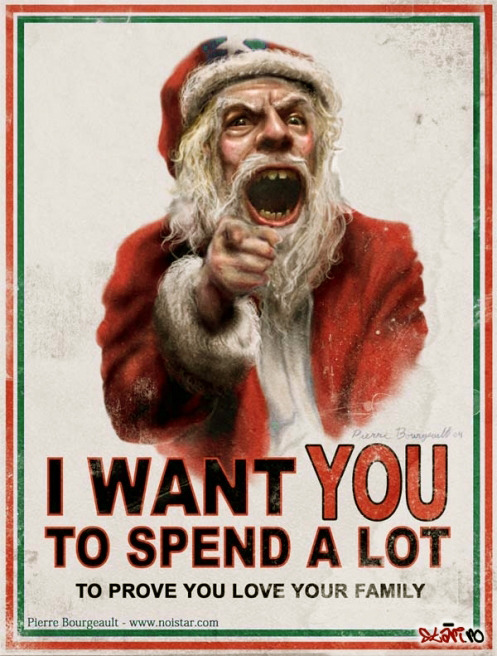


 We now have kittens in PA, so we can't walk around in bare feet anymore without stepping on something they've batted under the door. Which I did Sunday evening. As I was pouring hydrogen peroxide over the hole in my heel this morning, the WBAL traffic crawler noted that a large police presence had closed traffic at Pratt & Light. At the same time, WBAL's weather cutie Ava Marie was telling us about the Festival of Lights at the Power Plant, which is not very far at all from McKeldin Square. I had the feeling that the festivities would not be including Occupy Baltimore, and I couldn't help but wonder if
  In January 2011, Lester Brown, President of the Earth Policy Institute, predicted