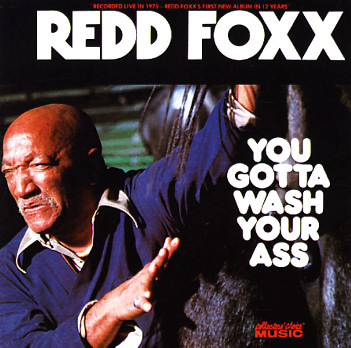
One of my pet peeves is people that don't shower before swimming in a public pool. Even in upper class neighborhood clubs and Ys, I always see Type A guys that rush in, yank on their jammers and rush out of the locker room to get a lane in the pool. No one is as clean as they'd like to imagine.
David S. Broder, 81, a Pulitzer Prize-winning columnist for The Washington Post and one of the most respected writers on national politics for four decades, died Wednesday at Capital Hospice in Arlington of complications from diabetes.
On Baseline Scenario, Simon Johnson has posted: Testimony submitted to the Congressional Oversight Panel, “Hearing on the TARP’s Impact on Financial Stability,” Friday, March 4, 2011.
For years, whenever significant political or financial turmoil reared its head anywhere on the globe, investors would turn to the U.S. dollar as a safe haven.
Yet as the chaos in North Africa has grown over the past month, investors have largely shunned the dollar and sought shelter elsewhere. They have turned to other traditional islands of stability, buying Japanese yen and the Swiss franc.
In a crowdsourced document used to coordinate the group’s actions, Anonymous members name Department of Defense Press Secretary Geoff Morell and chief warrant officer Denise Barnes as targets and call on members to dig up personal information on both, including phone numbers, personal histories and home addresses. The goal of the operation, for now, is to “dox” the two officials, the typical Anonymous method of publishing personal information of victims and using it for mass harassment.
But the Broadbalk field shows something else. Chart 1 tracks its yields from the start, showing how the three different kinds of wheat farming—African, Green Revolution and modern—have diverged, sometimes quite suddenly: in the 1960s with the introduction of new herbicides for Green Revolution wheat, and in the 1980s with new fungicides and semi-dwarf varieties. Worryingly, though, in the past 15 years the yields of the most productive varieties of wheat in Broadbalk have begun to level out or even fall. The fear is that Broadbalk may prove a microcosm in this respect, too.
By Donal on Mon, 03/07/2011 - 11:05am | Technology
In What Does Free Really Cost, I discussed the problems of free parking. A few weeks ago, in Should Transit Be Free?, Mark Brown, who has been documenting his car-free lifestyle at Car-Free Baltimore, discusses the many advocates of free transit, and summarizes their arguments:
The Fine Gael/Labour coalition Government is to implement in detail the outgoing Government's four-year austerity plan as approved by the EU-IMF, the Sunday Independent can reveal.
In what will amount to the most barefaced breach of election promises ever perpetrated by an incoming Government, the coalition partners' programme for government will cause uproar when it is published today.
Kevin Kelly, the éminence grise of Silicon Valley, holds the odd job title of “senior maverick” at Wired magazine, enjoying a cult following among thousands of geeks around the globe.
Gather round, netizens, for Clay Shirky has a story to tell. It’s a simple yet stirring saga of self-organization online, and an extension of the paean to the spontaneous formation of digital groups he delivered three years ago in his breakout book, Here Comes Everybody. But where Shirky’s earlier tract focused principally on the potential organizing power of the digital world, Cognitive Surplus asserts that the great Net social revolution has already arrived.
By Donal on Fri, 03/04/2011 - 10:11pm | Social Justice
Tonight on WEAA FM, the Anthony McCarthy show profusely lauded Clarence M. Mitchell, Jr., a civil rights leader who was born 100 years ago. I had never heard of him, but McCarthy and his guest said no one surpassed Mitchell's work for civil rights, and that he was not well known, even among African-Americans, because so much of his contribution was behind closed doors.
From the icy Arctic to Africa's dense jungles - and the mountain tops of Mongolia to the deep waters of the Pacific - the BBC series Human Planet has explored mankind's incredible relationship with nature.
Accompanying the film crews was photographer Timothy Allen. His stunning still images captured unique glimpses of people living in the world's most extreme environments. Take a look at some of them, and listen to him explain how he snapped the most arresting shots.
When presidents of government-funded broadcasting are making more than the president of the United States, it's time to get the government out of public broadcasting.
In 1990, [train-wreck-of-the-moment Charlie Sheen] accidentally shot his fiancée at the time, the actress Kelly Preston, in the arm. (The engagement ended soon after.) In 1994 he was sued by a college student who alleged that he struck her in the head after she declined to have sex with him. (The case was settled out of court.) Two years later, a sex film actress, Brittany Ashland, said she had been thrown to the floor of Mr. Sheen’s Los Angeles house during a fight. (He pleaded no contest and paid a fine.)
Most news outlets carried the story of the car plowing through a Critical Mass bike event in Porto Alegre, Brasil. 15 were injured, eight severely. There are some very graphic videos posted on youtube if you search for Massa Critica Porto Alegre.
... Fully 85% of foreign-exchange transactions world-wide are trades of other currencies for dollars. What's more, what is true of foreign-exchange transactions is true of other international business. The Organization of Petroleum Exporting Countries sets the price of oil in dollars. The dollar is the currency of denomination of half of all international debt securities. More than 60% of the foreign reserves of central banks and governments are in dollars.
The greenback, in other words, is not just America's currency. It's the world's.