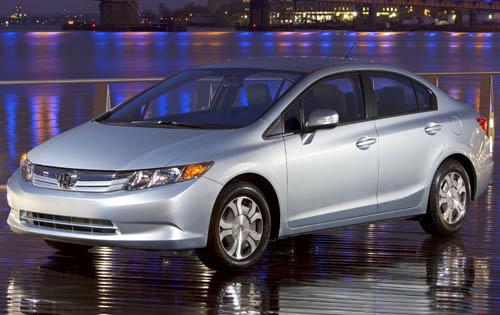
To develop this year's list of award-winning cars, we started by gathering all of the necessary data, and then applied our TCO® algorithms to estimate the five-year cost of owning each model year 2011 new vehicle currently in the market. We compared TCO® data for these vehicles for the period from July 29, 2010 to April 14, 2011 to reveal the value leaders. This list is similar to our monthly Lowest True Cost to Own® (TCO®) list. But in developing this annual list, we didn't just consider vehicles that have the lowest costs for any particular month. Instead, we identified those vehicles that have consistently maintained the lowest ownership costs.
I looked at monthly TCO costs for less expensive category winners (marked *) and compared hybrids with their non-hybrid stablemates where possible. TCO for the Ford Fusion Hybrid was not available. Under the usual TCO, Honda Insight is cheaper than the Civbrid winner, but perhaps the Insight was too new to meet their extended TCO judging criteria. Even though the Civbrid wins here, Honda's been getting a lot of less-than-enthusiastic press lately, as
Consumer Reports dropped the Civic from their recommended list.
Ford Fiesta Sedan* $31,651
Toyota Yaris Hatchback* $33,242
Honda Insight $32,083 (mild)
Honda Civic $33,229
Honda Civic Hybrid* $35,939 (mild)
Toyota Corolla $33,634
Toyota Prius One $36,827
Toyota Camry $38,619
Toyota Camry Hybrid $38,906
Nissan Leaf $35,177
Nissan Altima $39,084
Nissan Altima Hybrid $40,641
Chevrolet Cruze $38,634
Chevrolet Volt Hatchback $43,914
Hyundai Sonata $38,022
Hyundai Sonata Hybrid $45,591
Unlike the last time I compared, the Prius, Camry, Altima (and I would guess Fusion) hybrids now have TCO costs that are competitive with non-hybrids. The serial hybrid Chevy Volt and lithium polymer battery-driven Hyundai Blue Drive hybrid are beautiful cars, but figure to cost an extra five grand over five years. Eventually both full and mild hybrids will have to compete on price and features with small cars meeting the recent 54.5 mpg CAFE target. I read somewhere that the new mpg calculation will reward start-stop technology, aka
micro-hybrids, too.
Nearly 1,100 engineers and designers who currently work at auto makers and suppliers express doubts about being able to meet the target without affecting vehicle safety, size and cost. The WardsAuto survey was conducted by Paramount Research and sponsored by DuPont.
While environmental groups such as the Union of Concerned Scientists and the Natural Resources Defense Council claim a corporate fleet average of 60 mpg (3.9 L/100 km) or better could be reached with currently available technology, only one in four automotive engineers and designers agree.
But the real political challenge will be determining whether and how to apply more stringent CAFE standards to light-duty trucks and SUVs, which represent comfort and safety to those that can afford them, but are a danger when colliding with those driving the fuel-efficient subcompacts.


Comments
I'm somewhat surprised by these numbers, considering that they putatively included resale value into their calculations. By my calculations, my Civic hybrid had a lower TCO over a traditional Civic after less than three years once you factor in the significantly higher resale value. And, of course, it's only getting better. (I bought my hybrid in 2005.)
by Verified Atheist on Mon, 08/15/2011 - 1:29pm
Yes, you've mentioned that before. Edmunds' TCO archive only goes back to 2006 for your Civbrid, but you could probably compare item to item and get a sense of where they differ (put in your own zip code):
http://www.edmunds.com/honda/civic/2006/tco.html?style=100660627
by Donal on Mon, 08/15/2011 - 1:40pm
Huh, go figure. For their 2006 figures, the hybrid comes out ahead. Hybrid Sedan TCO: $26,493. Civic Sedan DX: $26,879. Civic Sedan LX: $27,774. Civic Sedan EX: $28,542. (Automatic for all of those.) As for differences, I've had no repairs to pay for, and my maintenance costs have been less than they report, but that would presumably apply across the board (I don't see a significant difference in what they're reporting for those costs depending on model). One other difference is that I had 0.9% financing, so that number dropped a bit (and since it's proportionate to cost, it is influenced by model). That said, I was totally forgetting to include it in my previous calculations.
The main thing I find wrong, and in my opinion it's very wrong, is their calculation of depreciation. They have the hybrid depreciating more than any of the other models, which makes absolutely no sense to me when you look at blue book values.
by Verified Atheist on Mon, 08/15/2011 - 1:56pm
That is strange. I did read that Honda was having battery problems early on, so maybe they were influenced by that. Another possibility is that the original Insight was such a dud that Edmunds assumed the Civbrid would be a dud, too. I have no idea if Edmunds revises these old TCO numbers like Blue Book does theirs.
by Donal on Mon, 08/15/2011 - 2:11pm
As another thought, after CARS (Cash for Clunkers) removed a lot of potential vehicles from the market, used cars cost a lot more - which would affect depreciation values across the board.
by Donal on Wed, 08/17/2011 - 8:51am
[I like Dan Choi, but don't spam my blog]
by mzchief (not verified) on Mon, 08/15/2011 - 4:26pm
You'll probably get a lot more mileage (no pun intended) by starting a blog about it. It's easy to register here, and I'm guessing you'd fit in.
by Verified Atheist on Mon, 08/15/2011 - 4:30pm