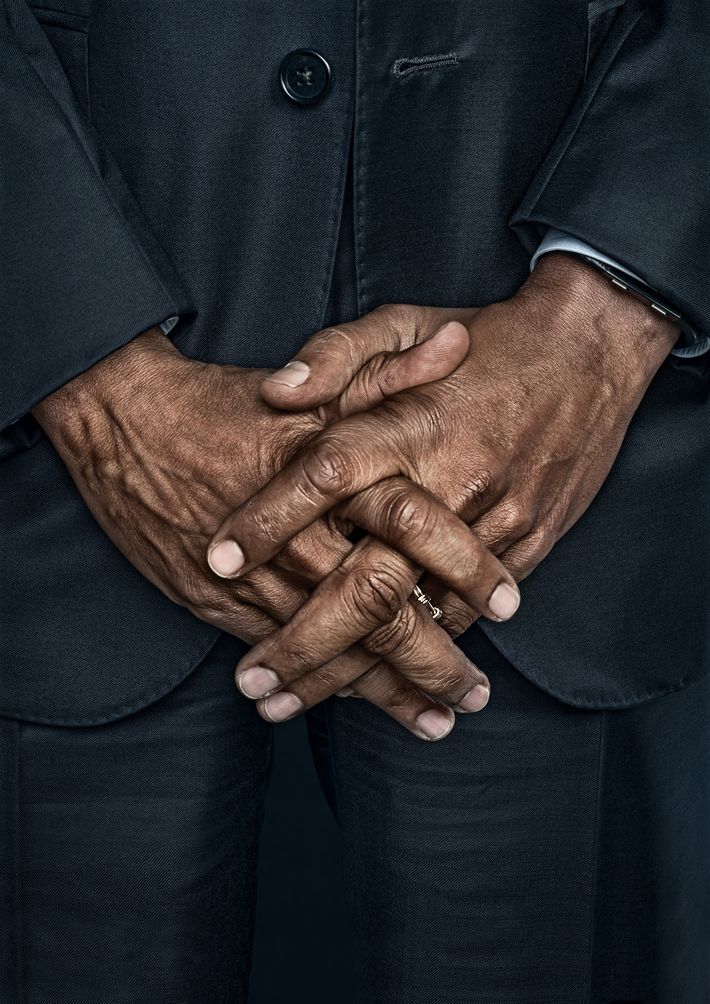
For the foreseeable future, nationalism is likely to remain a defining political force. A lot thus depends on the shape it is going to take. Instead of indulging in dreams of a post-national future, liberals should strive to make nationalism as inclusive as possible.
Utah Republicans made a rap video about making a bill into a law, set to the theme song of "The Prince of Bel-Air". Yes, rap. (Warning: you really can't unsee this).
Two years ago, film critic Sara Stewart sat down to rewatch “Sixteen Candles,” one of her favorite 1980s John Hughes comedies. She was mortified. One scene, played for laughs — the ostensible hero gifting his drunk girlfriend to another boy — seemed like a manual for rape.
The decision was a setback for the Justice Department, which under President Trump had unexpectedly interceded in a discrimination lawsuit filed by a sky-diving instructor. The department had argued that Title VII of the 1964 Civil Rights Act did not explicitly cover sexual-orientation discrimination in the workplace, a stance that put it at odds with another federal body, the Equal Employment Opportunity Commission.
I was a child in the sixties, and grew up with Billy Graham on our little black and white TV. We weren't an overtly Christian family (far too admittedly dysfunctional), but he was my parental attempt at being mainstream, I suppose. My Mom loved him, so I did.
In a past life I was very close to someone who worked for Samaritan's Purse as first a missionary and then, eventually, a numbers cruncher. As the former, his family suffered due to his long absences and meager pay. The latter came to pass because four kids and a wife finally said no more to both. Even as true believers, the family complaints (and questions) were eventually enough to make the difference. He was able to stay closer to home, though his pay was still minimal.
There is nothing in the Constitution that says we have to have congressional districts. Article 1, Section 2, says merely that “the House of Representatives shall be composed of members chosen every second year by the people of the several states.” No particular method is prescribed.
It’s been dubbed "the loneliest tree on the planet" because of its remote location, but the Sitka spruce might represent something quite profound about the age in which we live.
Reporting from the desert of Niger to a small town in Georgia, The New York Times reconstructed how four American soldiers lost their lives — and why they were in Africa to begin with.
By Rukmini Callimachi, Helene Cooper, Eric Schmitt, Alan Blinder and Thomas Gibbons-Neff
I have no idea or particular opinion about whether Garrison Keillor is guilty of anything, though it's always struck me as odd. But this somewhat but not quite illuminating article gums up the works a bit when taken as a part of a whole. The whole, of course, being accusations flying hither and yon with little if any explanation - even when they could stand some.
This Cnet article is one of many on the page itself ... I got to it by originally being interested in Tim Cook's remarks at the Apple shareholder meeting. This was far more interesting, and basically began with:
How does blockchain actually work?
OK, strap yourself in, because this gets a bit hairy.
A good place to start is the name: a blockchain is an ever-growing set of data blocks. Each block records a collection of transactions -- for example, that you now hold the title to the car you bought or that you paid a car dealer to get it.
For much of the last year, the stock market glided higher, lifted by solid economic growth and corporate profits, low interest rates and few signs of inflation.
That smooth ride might now be ending.
The Standard & Poor’s 500-stock index fell 2.1 percent on Friday, ending its worst week in two years. The Dow Jones industrial average tumbled more than 660 points, or about 2.5 percent.
So I very much understand the question I’m being asked as to why I let an employee on my 2008 campaign keep his job despite his inappropriate workplace behavior.
The short answer is this: If I had it to do again, I wouldn’t.
Trump's days in the Oval Office are relatively short – from around 11am to 6pm, then he's back to the residence. During that time he usually has a meeting or two, but spends a good deal of time making phone calls and watching cable news in the dining room adjoining the Oval. Then he's back to the residence for more phone calls and more TV.