Every September 22, people from around the world get together in the streets, intersections, and neighbourhood blocks to remind the world that we don't have to accept our car-dominated society.
In his Foreign Policy article Got Cheap Milk?, "The Optimist" Charles Kenny decries local, organic food and especially government subsidies to farmer's markets:
I hadn't seen the advert in which Chris the customer says he bought a Ford because they hadn't been bailed out, but TTAC has the youtube in their article Ford Takes the Gloves Off About the Bailouts:
The anniversary of the largest oil spill in American history passed with little notice this summer. On July 15, 2010, the ruptured BP oil well in the Gulf of Mexico was finally sealed after gushing oil for nearly three months, but there were few stories to commemorate it a year later, owing in part to the headline-consuming hacking scandal that had broken out at Rupert Murdoch’s News Corp. The occasion might have gone unnoticed even if there had been nothing to nudge it aside, because business-as-usual has returned with surprising speed to the Gulf of Mexico and to America.
By Donal on Mon, 09/19/2011 - 11:37am | Technology
The Solar Decathlon felt like a small Olympic village today as team members from Canada, New Zealand, Belgium, China and the US hustled to finish their houses by Tuesday evening. Wearing Red Wing boots, I trudged the 1.3 miles from the Smithsonian Metro station to West Potomac Park. Because the nineteen small structures are still under construction, visitors were required to wear hard-soled boots, long trousers, a shirt with sleeves, safety glasses and a hardhat.
Writing The Prize (1991) , and winning a Pulitzer for it, brought Daniel Yergin automatic creds in the energy industry. Through Cambridge Energy Research Associates (CERA), he has consistently maintained a cornucopian viewpoint about the future availability and price of oil, to the point that the energy depletion community has defined a Yergin unit as the $38 per barrel that in 2005, Yergin predicted would be the steady price of oil. Oil reached two Yergins in 2006, spiked to 3.6 Yergins in 2008, and currently Brent crude is trading at 3 Yergins.
[Guernica] The last victim was buried on August 18th, and the international media is long gone from Norway. But Norwegian media are still compulsively following every development in the Anders Behring Breivik case. While the rest of the world is consumed with the 9/11 anniversary, the Norwegian papers are writing that the gunman who shot 68 kids on Utøya and set off a massive bomb in central Oslo wanted to wear white tie and tails to his court date on August 19th.
[Green Building Advisor] I would consider myself open-minded about wind power. I believe we need nonpolluting sources of energy to wean ourselves from fossil fuels and to stave off climate change. On the other hand, I've heard that wind developments can have a surprisingly big impact on the environment. ...
This downsizing is happening globally,” said Eric Fedewa, an auto industry analyst with IHS Automotive. “Sixes are replacing eights, fours are replacing sixes and now threes are replacing fours.”
Engines will only get smaller as automakers scramble to hit corporate average fuel economy standards expected to reach 54.5 mpg by the 2025 model year. ... adoption of turbocharging, direct injection, variable cam timing and other tricks ensures decent, if not stellar, oomph. Ford, for example, boasts that its little three-cylinder will perform like a 1.6-liter four.
[The Contrary Farmer, Gene Logsdon writes:] One of the biggest laughs of the last decade or so has been the way our vaunted economy has “licked inflation.” Every time we took another lick off of the delicious ice cream cone, the price of farm land leaped another lick higher. Every time the Federal Reserve licked interest rates lower, the price of houses jumped another lick up. Every penny “saved” on interest meant two or three pennies spent on construction that became a colossal loss when the owner could not make payments.
By Donal on Wed, 09/14/2011 - 10:07am | Technology
Solar Decathlon: A sneak peek at the houses from Mother Nature Network offers a quick look at each entry. Assembly started yesterday, and the event is open to the public starting September 23rd through October 2nd at the National Mall's West Potomac Park, near the FDR memorial, and not too far from the MLK memorial.
The US Open has played out on the men's side more or less as expected - the top four seeds made it to the quarterfinals and the top two seeds made it to the finals. Mardy Fish and Andy Roddick had decent runs, but lost to Jo Wilfried Tsonga and Rafa Nadal. Tsonga could not beat Federer this time. The former teen phenom Donald Young had a good run but eventually lost to Andy Murray. In his bio, Hardcourt Confidential, Patrick McEnroe hinted at the stormy relationship he had with Young's parents, claiming that they demanded far more resources than USTA player development had to give. But as a broadcaster PMac had only positives for Young.
By Donal on Thu, 09/08/2011 - 8:26pm | Arts & Entertainment
In Efficiency is the Solution, Tom Whipple predicts the future by describing what we are already seeing:
For the immediate future, however, much of what life in the future will be like will depend on the technologies that will enable civilization to continue while using only a fraction of the energy that is consumed today and to develop the technology to produce large quantities of cheaper renewable fuels. The manner in which our fossil fuels are being used is so wasteful of the energy contained in fossil fuels that major reductions can be made with little real impact on the activities that consume energy. The prime examples of this waste is the internal combustion engine which uses only 14 percent of its fuel to turn the wheels while wasting most of the rest. Huge central power plants waste most of the energy that devours coal and natural gas, and produce much waste heat that is dumped into the air or local water bodies or in line losses. Without the massive waste, the fossil fuel age could last a lot longer.
... last month, ... someone leaked confidential documents detailing the positions of Wall Street speculators—including Goldman Sachs, Morgan Stanley, JPMorgan Chase, Deutsche Bank, and Barclays—from a single day that fateful summer, June 30, 2008. More than 200 companies held investments in millions of barrels of oil that day, many of them companies that neither produce nor use oil.
While electrified vehicles will become a growing portion of total vehicle sales, the penetration rates will remain relatively low in the context of the total automotive industry. Pike forecasts that PEV and HEV sales together will represent approximately 3% of total light-duty vehicle sales in 2017. Adoption rates will be highest in North America, Pike projects, where electrified vehicles will capture 4.9% of the total light-duty vehicle market in that year.
[For comparison, hybrid market penetration now is less than 2% and EV market penetration now is less than 0.2%.]
By Donal on Wed, 09/07/2011 - 1:11pm | Food & Drink
In the Wall Street Journal article, Can the World Still Feed Itself?, Austrian Peter Brabeck-Letmathe, chairman and former CEO of Nestlé, portrays genetically-modified (GMO or GM) crops as the hero, and food-for-fuel as the villain in the effort to feed six, seven, or even nine billion planetizens:



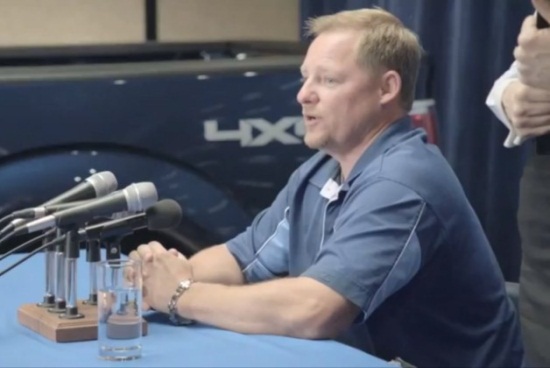 I hadn't seen the advert in which Chris the customer says he bought a Ford because they hadn't been bailed out, but TTAC has the youtube in their article
  Writing


 In
In 